


Henri Cartier-Bresson once said that photography was "a way of shouting, of freeing oneself, not of proving or asserting one's one originality. It is a way of life". This big book, which accompanies a retrospective of his work at the Museum of Modern Art in New York, shows how much photography was a way of life for a man who is one of the undisputed masters of the medium.
It contains 300 images, some of which are familiar, even over-familiar, but many of which have not been seen before. In his illuminating introductory essay, the curator of the Moma show, Peter Galassi, writes: "Cartier-Bresson's legacy… is a vast resource whose greatness would be sorely diminished if attention were paid only to its many perfect gems." What intrigues most here, though, are the many perfect gems that never made it into his books.
The Modern Century, then, is a reassessment of Cartier-Bresson's importance both as the master of what he called "the decisive moment" and as a chronicler of the changing times in which he lived. Though he is best remembered for what might be termed his gentle reportage of everyday life, he was an inveterate adventurer, roaming though his native France, America, India, Pakistan, Indonesia, Singapore, China, Iran and Egypt. He was travelling across America, when Magnum, the agency with which his name is inextricably linked, was founded.
Take the photograph simply entitled New York City 1946. It is as if he thought any other information was unnecessary. As Galassi notes, it captures a moment of "considerable simplicity and wholeness", but also a moment of intense dramatic intimacy: a mother reunited with her son after the Second World War.
The setting is an overcrowded pier where every face tells a story. The mother is tenderly solicitous, the son overwhelmed with emotion. Behind him, a man looks suspiciously at the camera, his anxiety and uncertainty apparent. Above the embracing couple, a man waves happily in recognition of someone out of the frame while, beside him, another man strains to catch a glimpse of a returning relative or friend. In the bottom left hand of the frame, a child looks hopefully into the middle distance. It is a photograph so teeming with life and drama that it could form the basis of an epic film or novel. It is, in short, the decisive moment writ large.
============================================================
앙리 카르티 - Bresson의 뉴욕시, 1946의 세부. From Henri Cartier-Bresson: The Modern Century by Peter Galassi, published in Britain on 12 April 2010 by Thames & Hudson. 템스 & 허드슨에 의해 2010년 4월 12일에 영국에서 출판된 피터 Galassi에 의해 현대 세기 : 앙리 카르티에 - Bresson 있습니다. Photograph: Henri Cartier-Bresson/Magnum Photos 사진 : 앙리 Cartier-Bresson/Magnum 사진
Henri Cartier-Bresson once said that photography was "a way of shouting, of freeing oneself, not of proving or asserting one's one originality. It is a way of life". 앙리 카르티 - Bresson은 한번다고 사진이 되었다 "하나 하나 주장 증명이나하지, 독창성을하다 방법 뱅의 해방. 그것은 생활 방식입니다." This big book, which accompanies a retrospective of his work at the Museum of Modern Art in New York, shows how much photography was a way of life for a man who is one of the undisputed masters of the medium. , 수반이 책은 큰 작품을 자신의 회고전의 뉴욕에서 새로운 예술의 현대 미술관에서, 매체 보여줍 어떻게 패배를 모르는 주인 중의 하나입니다 많은 사람을위한 방법의 생활 사진 촬영했습니다.
- Henri Cartier-Bresson: The Modern Century 앙리 카르티에 - Bresson : 현대 세기
- by Peter Galassi 피터 Galassi로
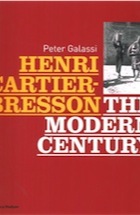
- Buy it from the Guardian bookshop 책방 보호자 구매 그것을에서
The Modern Century , then, is a reassessment of Cartier-Bresson's importance both as the master of what he called "the decisive moment" and as a chronicler of the changing times in which he lived. 현대 세기는 다음과 순간 "-이다 재평가의 카르티에 Bresson 결정"이라고 그가 무슨 중요성이 모두로 마스터의 살아있는 저 사람은 변화하는 시대로의 연대기 편자. Though he is best remembered for what might be termed his gentle reportage of everyday life, he was an inveterate adventurer, roaming though his native France, America, India, Pakistan, Indonesia, Singapore, China, Iran and Egypt. 그는 최상의 일상 생활의 그의 부드러운 보도해을 되나 것에 대해서 기억하고 있지만, 그는 원래 프랑스, 미국, 인도, 파키스탄, 인도네시아, 싱가포르, 중국,이란, 이집트 로밍 불구하고, 뿌리 깊은 모험가가되었다. He was travelling across America, when Magnum , the agency with which his name is inextricably linked, was founded. 그는 미국 여행 건너편에 있었는데 매그넘은 , inextricably 연결된 기관으로 어느입니다 그의 이름은, 설립되었습니다.
Take the photograph simply entitled New York City 1946 . 1946 뉴욕시 받아 새로운 사진을 간단하게 제목. It is as if he thought any other information was unnecessary. 그가 어떤 다른 정보는 불필요한라고 생각한다면 그것은이다. As Galassi notes, it captures a moment of "considerable simplicity and wholeness", but also a moment of intense dramatic intimacy: a mother reunited with her son after the Second World War. 차 세계 대전 후 그녀의 아들과 다시 어머니 : Galassi 노트로서, 그것은 "상당한 단순하고 일체"의 순간을뿐만 아니라, 강렬한 친밀감의 극적인 순간 캡처합니다.
The setting is an overcrowded pier where every face tells a story. 이 설정은 모든 얼굴이 이야기를 초만원 부두입니다. The mother is tenderly solicitous, the son overwhelmed with emotion. 엄마는 부드럽게 열심인이고, 아들이 감정에 압도. Behind him, a man looks suspiciously at the camera, his anxiety and uncertainty apparent. 그 뒤에, 한 사람이 카메라, 그의 불안과 불확실성 겉보기에 의심 보인다. Above the embracing couple, a man waves happily in recognition of someone out of the frame while, beside him, another man strains to catch a glimpse of a returning relative or friend. 받아 부부보다 프레임의 사람 중에 인식 행복에 빠진 남자의 파도가 다른 남자의 변종이 반환 친척이나 친구의 장소이기도하고, 그 옆에있는 동안. In the bottom left hand of the frame, a child looks hopefully into the middle distance. 프레임의 하단 왼쪽에서, 아이가 중간 거리에 타운대 보인다. It is a photograph so teeming with life and drama that it could form the basis of an epic film or novel. 그것은 사진은 너무 서사 영화 또는 소설의 기초를 형성 수도 생활과 드라마들 투성이야. It is, in short, the decisive moment writ large. 그것은 결정적인 순간 영장 큰, 즉,이다.


![Henri Cartier-Bresson:The Man, the Image and the World: A Retrospective[Paperback]](https://cdn-saas-web-203-48.cdn-nhncommerce.com/rktkszkapfk08_godomall_com/data/goods/10/02/03/25486/201002031205592.jpg "Henri Cartier-Bresson:The Man, the Image and the World: A Retrospective[Paperback]") SOLD OUT
SOLD OUT

 SOLD OUT
 SOLD OUT

 SOLD OUT


